

Texture matching
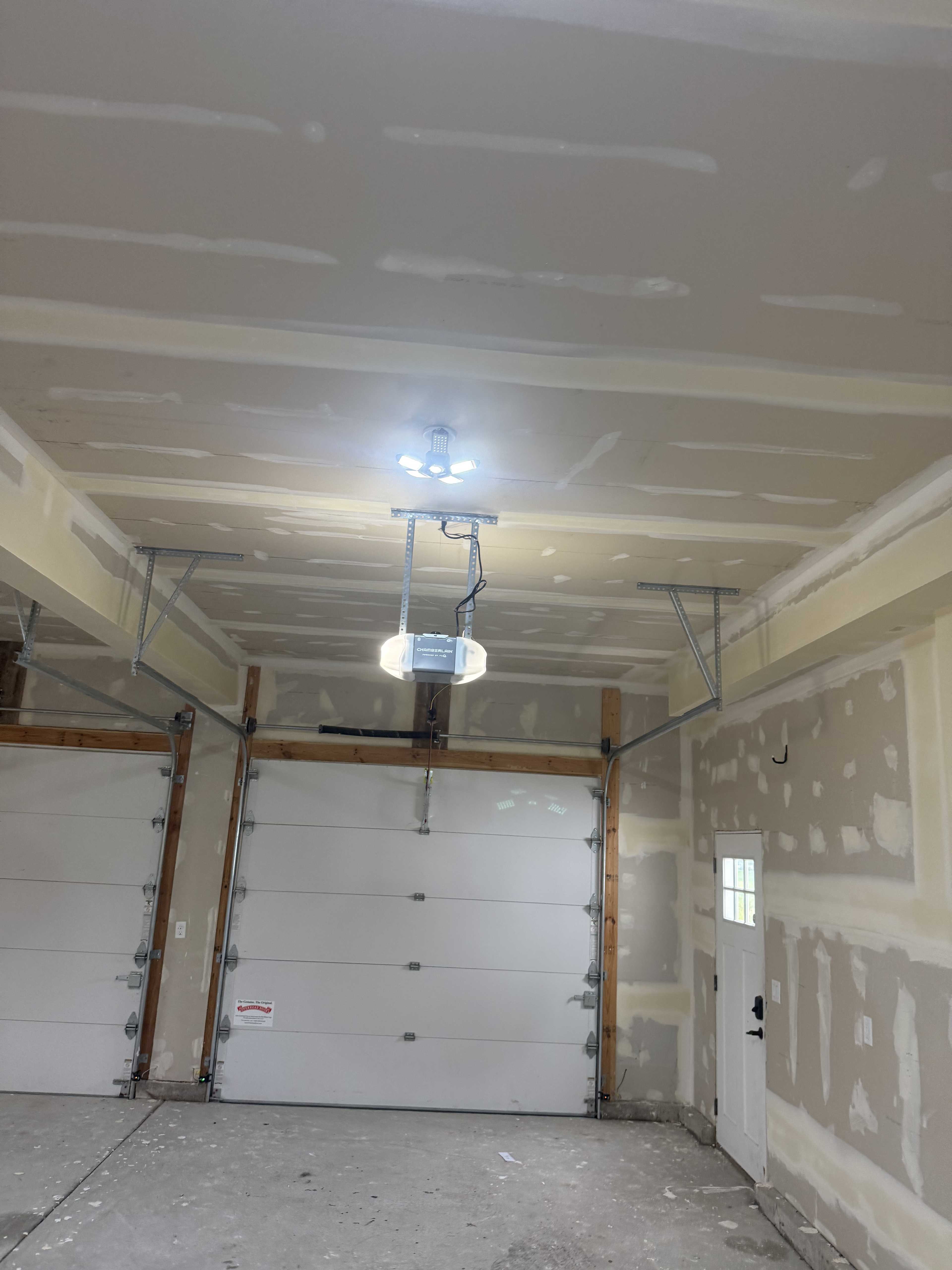
A texture match works when you cannot find it afterwards. That means reading the pattern already there — its size, its spacing, how hard it was flattened — and reproducing it, rather than spraying something close and hoping the paint pulls it together.
Texture matching
What it involves
Often for
- Orange peel
- Knockdown
- Skip trowel
- Sand swirl
- Reading the pattern: its size, spacing and knockdown
- Trying a sample on a scrap of board first
- Applying it by hand or spray, to match
- Painting out to a natural break
Step by step
How it goes
Look at the damage
Find what caused it and how far it goes before anything is cut.
Cut back and replace
Out to sound board, new board in, the edges taped so they stay closed.
Finish and match
Coated flat and textured to match what is already on the wall.
Paint to blend
Primed and painted out to the nearest corner, so the repair does not show as a square.
Inside the wall
Built layer by layer
Drag it to turn it. Choose a layer to see the wall as it stands at that step.
Primed and painted by the same crew, so the finish shows no seam.
The details
Done properly
Read before it is sprayed
The pattern on the wall is studied for size, spacing and how hard it was knocked down.
Tried on a scrap first
A sample goes on a spare piece of board and is held against the wall before it touches the repair.
Painted through
Texture changes how paint reads, so the finished repair is painted out to a natural break.
See this work in the gallery
Questions people ask
Which textures can you match?
Orange peel, knockdown, skip trowel, sand swirl and most hand textures.
Can a texture be taken off altogether?
Yes. Walls and ceilings can be skim-coated smooth.
Tell us about the job
The more you can say about the room, the ceiling height and the state of what is there now, the sharper the first answer will be. Most questions are settled in one call.