

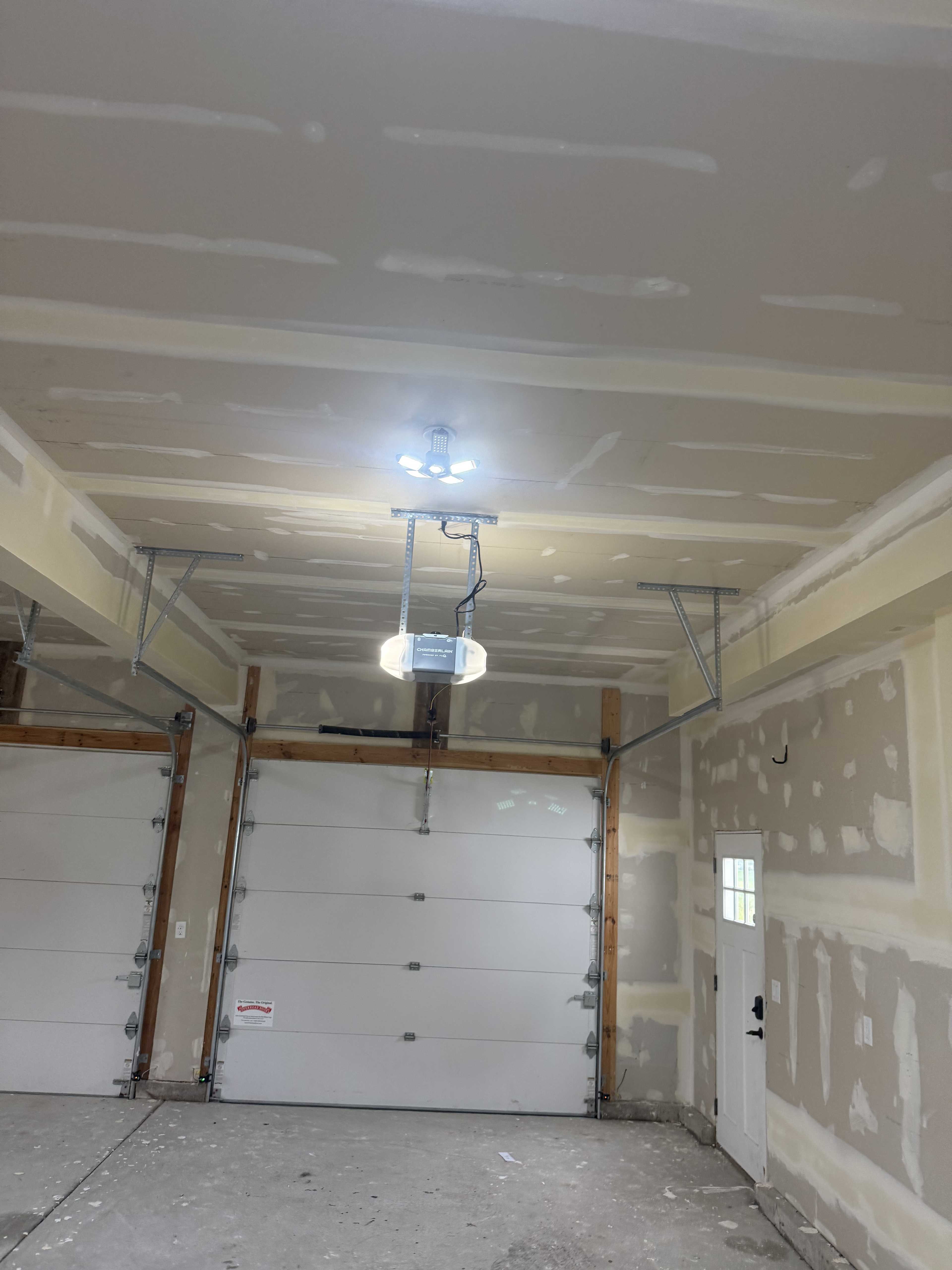
Drywall installation
Everything after it inherits the hanging. Board cut and fixed to framing with the joints kept clear of doors and windows, where movement concentrates. A joint in the wrong place is a crack no amount of taping will hold.
Drywall installation
What it involves
Joints taped, bedded and coated to a level chosen for your room, not a default. A wall taking hard light from a window needs more than one that does not, and a room getting gloss needs more again. We pick the level before anything is coated.
Often for
- New homes
- Additions
- Rooms opened to the studs
- Measuring each room and planning where the sheets go
- Hanging board on wood or steel framing
- Corner bead set on every outside corner
- Taping, bedding and coating every joint
- Sanding smooth and priming, ready for paint
Step by step
How it goes
Walk the job
Measure, check the framing, and agree the finish level for each room.
Hang
Board fixed to the framing with the joints kept clear of doors and windows.
Tape and coat
Joints taped and coated, each coat left to dry before the next.
Sand and prime
Sanded smooth, primed, and ready for paint — or painted, if that is on the quote.
Inside the wall
Built layer by layer
Drag it to turn it. Choose a layer to see the wall as it stands at that step.
Primed and painted by the same crew, so the finish shows no seam.
The details
Done properly
Board laid out first
Sheets are planned around doors and windows so the joints land where the wall moves least.
Straight corners
Corner bead set true before the first coat, so every outside corner reads as one line.
A finish chosen for the room
Level 3 under heavy texture, level 4 for most walls, level 5 where light rakes across flat paint.
See this work in the gallery
Questions people ask
Can you work to the other trades’ schedule?
Yes. Say when framing, electrical and insulation are signed off, and the board goes up after them.
Do you supply the board?
Yes. Material is on the quote, line by line, with the thickness and type for each room.
Tell us about the job
The more you can say about the room, the ceiling height and the state of what is there now, the sharper the first answer will be. Most questions are settled in one call.